
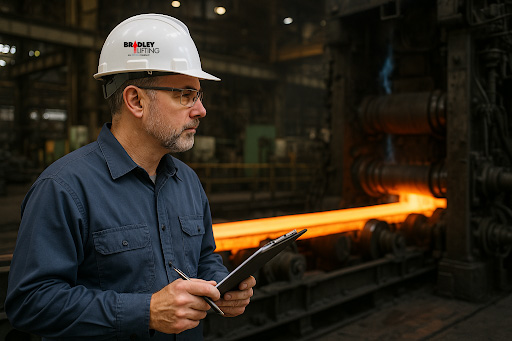
 When mill operations come to a halt, the financial impact is immediate, but the ripple effects can be even more significant. In primary metals manufacturing, such as steel and aluminum production, unplanned downtime disrupts high-volume operations, leading to substantial losses. This post examines downtime costs, providing context for how these figures apply to capital-intensive sectors like primary metals.
What Does Downtime Really Cost Per Hour?
Industry-wide data highlights the steep financial toll of downtime, though figures vary by sector and scale. For general manufacturing, the average cost of unplanned downtime can exceed hundreds of thousands per hour, primarily due to lost productivity. This estimate reflects a broad average across manufacturing operations and includes factors such as halted production and ongoing overheads.
Unplanned downtime in industrial operations can be particularly costly for industrial businesses, including sectors like metals, and accounts for direct losses in output and indirect costs like repairs. In high-stakes sectors like automotive manufacturing, costs can reach millions per hour, driven by rapid production lines and high-value throughput.
While data specific to primary metals, like steel or aluminum mills, aren’t typically quoted hour-by-hour, these industries share similar cost structures: high-production environments, thin margins, and zero tolerance for unplanned outages. It’s common for steel and aluminum mills to face hourly losses in excess of six figures as a result of direct and indirect costs related to unplanned downtime.
Beyond the Numbers
The financial impact of downtime goes beyond lost production, encompassing several indirect costs:
- Wasted labor costs: During outages, work comes to a stand-still, adding to overhead without generating value. In primary metals, where skilled operators handle complex machinery, this can compound quickly.
- Emergency spares and repairs: Urgent procurement of parts often incurs premium pricing and expedited shipping, inflating expenses. For steel and aluminum mills, specialized components like furnace parts can be particularly costly.
- Startup inefficiencies: Resuming operations requires recalibration, quality checks, and potential rework, leading to additional time and material losses. In continuous-process industries like metals manufacturing, these restarts can disrupt product consistency and increase scrap rates.
- Safety risks: Although equipment starts and stops account for only about 5% of operational time, they contribute to roughly 40% of workplace incidents. In primary metals, with hazards like high temperatures and heavy equipment, rushed restarts during unplanned downtime heighten accident risks.
- Reputation and morale hits: Frequent outages can erode internal trust and damage customer relationships through delayed deliveries. For primary metals suppliers serving just-in-time industries like construction or automotive, reliability is key to maintaining contracts.
Large steel manufacturers, for instance, spend billions annually on maintenance, with a significant percentage allocated to addressing unplanned downtime.
How Often & How Long Do These Downtimes Last?
The average unplanned outage lasts multiple hours, amplifying costs through cascading effects like payroll overhead, repair expenses, and scheduling disruptions. In primary metals, where processes are interdependent (e.g., a furnace outage halting downstream rolling), even a single multi-hour event can lead to significant revenue loss, given hourly outputs that drive millions in value.
Downtime can represent a significant percentage of total operational time across manufacturing, highlighting the need for proactive management.
What Prevents the Cost from Spiraling
Predictive maintenance offers a proven strategy to mitigate downtime. By using data analytics and sensors to forecast failures, it is possible to reduce machine downtime by 30-50% and extend equipment life by 20-40%. In the metal industry, this approach minimizes component failures and emergency interventions, potentially lowering maintenance costs.
Digitized inspections and data-driven scheduling further enhance response times, reducing incident durations and supporting compliance with safety standards. For primary metals manufacturers, adopting these tools can prevent the escalation of minor issues into costly outages.
How Bradley Lifting Can Help
For primary metals manufacturers, every hour counts. Bradley Lifting’s deep expertise in heavy-duty, custom below-the-hook lifting devices, and its growing capabilities in proactive maintenance and lifecycle support, can be a difference-maker:
- Minimizing unplanned outages through rugged design and responsive service
- Targeted inspections that evaluate product lifecycle and focus on high-risk wear points, providing recommendations for proactive service to minimize downtime.
- Asset management programs that advise safety stock levels for critical components, enabling faster return to production and saving real dollars that compound quickly
Downtime isn’t just idle machinery – it’s real money leaking from your mill. Bradley Lifting is positioned to help plug those financial drains before they become crises. Contact us to learn more.